
SEO, AEO and GEO: what each one is for
SEO, AEO, and GEO each help users find content in different ways. SEO boosts visibility in classic search engines. AEO targets answer engines like voice assistants and featured snippets. GEO prepares content for generative AI models. A small team can start with a technical audit.

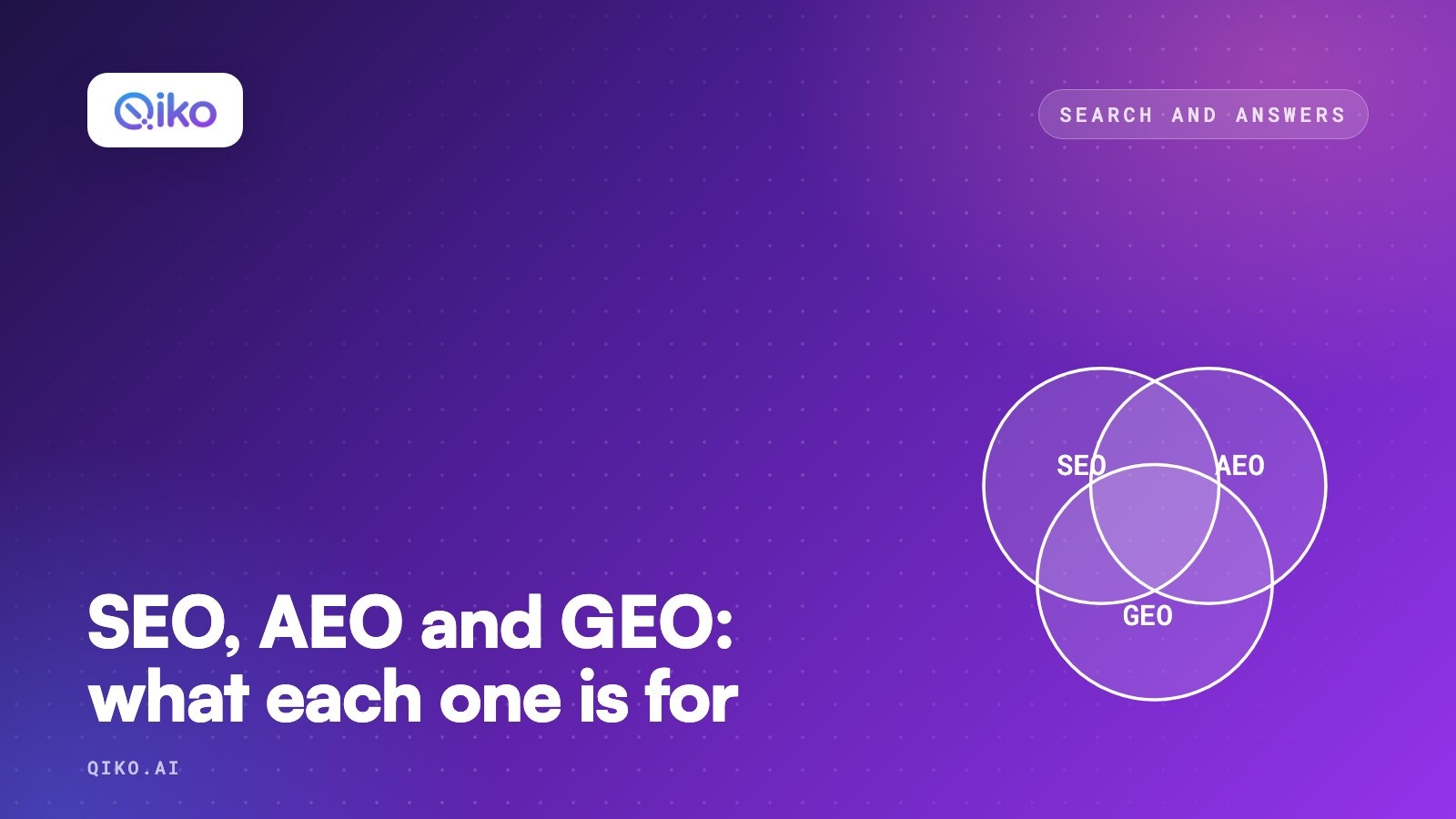
Marketing and growth leaders often hear the acronyms SEO, AEO and GEO. They sound similar, but each focuses on a different way people find information online. Understanding what each one means, where the ideas overlap, and how to tackle them in a small team can turn a scattered effort into a clear roadmap.
Search Engine Optimization (SEO)#
SEO is the practice of making a website more visible in traditional search engines such as Google, Bing or DuckDuckGo. The goal is to help the engine understand what a page is about and why it should appear for relevant queries.
Core elements#
- Keyword relevance - using terms that match what people type into a search box.
- Technical health - ensuring pages load quickly, have clean URLs, and are free of broken links.
- Content quality - providing useful, original information that satisfies user intent.
- Backlinks - earning mentions from other reputable sites, which signals authority.
What a small team can do first#
- Audit the current site - run a crawl to spot missing titles, duplicate meta descriptions, and slow pages.
- Map core topics - list the main problems your customers face and the language they use.
- Create a content calendar - schedule a few high-value pieces each month, focusing on the topics from step 2.
- Fix the basics - improve page speed, add descriptive alt text to images, and set up a simple XML sitemap.
Answer Engine Optimization (AEO)#
AEO targets the newer “answer engines” that aim to give direct answers instead of a list of links. These include voice assistants, chatbots, and the featured snippets that appear at the top of a search results page.
Core elements#
- Concise, structured answers - format content so the engine can extract a clear response (e.g., bullet points, tables, short paragraphs).
- Schema markup - add structured data tags that tell the engine the type of information (FAQ, product, event, etc.).
- Question-focused content - write pages that directly address common questions, using the exact phrasing a user might speak.
What a small team can do first#
- Identify top questions - look at internal search logs, support tickets, or community forums to see what users ask most.
- Create “answer blocks” - for each question, write a 40- to 60-word paragraph that directly answers it, then expand with supporting details below.
- Add schema - use a simple JSON-LD snippet for FAQs or how-to guides; many CMS plugins make this easy.
- Test for snippets - search for your question and see if a featured snippet appears; adjust wording if needed.
Generative Engine Optimization (GEO)#
GEO is a newer concept that prepares content for AI-driven generative models like ChatGPT, Claude or Gemini. These models generate answers based on patterns they have learned, and they often pull from publicly available web content.
Core elements#
- Authority signals - clear author bios, up-to-date references, and transparent sourcing help a model treat your page as trustworthy.
- Comprehensive coverage - a single page that fully explores a topic is more likely to be cited by a model than a thin, fragmented post.
- Human-like tone - writing that reads naturally, with clear headings and logical flow, aligns with how generative models segment information.
What a small team can do first#
- Pick pillar topics - choose a few broad subjects that relate to your core offering.
- Write long-form guides - aim for depth, covering definitions, use cases, best practices, and common pitfalls.
- Cite sources - link to reputable references and include a brief “why we trust this source” note.
- Maintain freshness - schedule periodic reviews to update data, tools, or regulations.
Where the Three Overlap#
- Content quality is the foundation for all three. A well-researched article benefits SEO rankings, can be extracted for a featured snippet, and may be quoted by a generative model.
- Structured markup helps both AEO and GEO. Schema not only enables snippets but also signals to AI models the hierarchy of information.
- User intent drives keyword selection, question framing, and topic depth. Understanding what a user wants guides every optimization effort.
Where They Differ#
| Aspect | SEO | AEO | GEO |
|---|---|---|---|
| Primary output | List of links | Direct answer or snippet | Generated narrative |
| Key format | Page-level relevance | Short, answer-ready blocks | Comprehensive, authoritative guides |
| Ranking signal focus | Backlinks, page authority | Structured data, concise answers | Trust signals, depth, recency |
Sequencing the Work for a Small Team#
- Foundation first - Run a technical SEO audit and fix critical issues (speed, crawl errors, mobile friendliness). This creates a stable base for any later work.
- Answer layer next - Build a list of top user questions, create answer blocks, and add schema. These can be added to existing pages without a full rewrite.
- Authority layer last - Develop a few pillar guides that cover each major topic in depth. Publish them on a regular cadence, and keep them updated.
By moving from “fix the house” to “add a porch” to “build a showcase room,” the team can see progress at each stage without being overwhelmed.
Practical Takeaway#
- Start with a quick technical health check; a stable site is a prerequisite for everything else.
- Identify the three most common questions your audience asks and turn each into a concise answer block with schema.
- Choose one high-level topic, write a thorough guide, and treat it as a reference that both search engines and AI models can rely on.
- Schedule a monthly review to update answers and guides, keeping the content fresh and trustworthy.
Follow these steps in order, and you’ll create a layered optimization strategy that serves traditional search, answer engines, and generative AI without stretching a small team thin.
Keep reading
 AI visibility
Why one AI visibility score is never the whole story
An AI visibility score is only a snapshot. Different queries, assistants, and run times produce varied results. Break scores into mentions, recommendations, and citations, track source diversity, freshness, and relevance, and use averages to guide strategy.
 AI visibility
How to make your website easier for AI assistants to understand
Make your site AI-assistant friendly by organizing a clear hierarchy, using question-style headings, adding product/FAQ/organization schema, keeping pricing copy plain, ensuring crawl access, and maintaining consistent facts across all pages.
 AI visibility
What AI visibility is and why your brand should care
AI visibility lets your brand appear directly in AI assistant answers instead of just a list of links. By auditing content, adding schema, creating concise answer-focused copy, and engaging platform programs, you can become the recommended source and capture new traffic.
See how AI
sees your business
It takes one scan to find out. Start free.
